
The union for tens of thousands of council workers has moved to establish emergency work from home rights, a four-day week and a 50 per cent increase in fuel subsidies to combat the oil shock caused by the Iran war.
A successful outcome, whether by consent or arbitration, could set a standard for other office workers to follow.
The United Services Union will argue in the NSW Industrial Relations Commission on Thursday that temporary award conditions are needed for more than 55,000 staff at the state’s 128 councils to cope with rising fuel costs.
The landmark application is the second to formally seek emergency workplace conditions in response to the fuel spike, following a push by truckies for dozens of transport clients to cover unprecedented fuel increases.
It comes just as the United States, Israel and Iran agreed on Wednesday to a two-week ceasefire and reopening the Strait of Hormuz. The price of oil fell below $100 a barrel in response to the news.
Daniel Papps, USU head of legal, said the union had written to all 128 councils last week asking them to look at work from home for staff who can do so and consider four-day weeks for those who cannot.
“Since then we have seen no change in the situation in the Middle East and so now we are ramping up our efforts on behalf of our members to make sure they’re not carrying the impact of this crisis,” he said.
“Even if there is a ceasefire some of the consequences are going to take a while to get through the system. We need to do something now.”
The so-called splinter award would last 12 months and be triggered whenever the price of unleaded petrol goes above $2 a litre, linking to retail prices from the Australian Institute of Petroleum.
Work from home would extend to up to five days a week, depending on the position or location of the worker, while a four-day week option could involve staff working a few hours more every day to save one daily commute.
The union is also proposing to increase council workers’ fuel subsidies to $1.25 per kilometre, up from the current 83¢ per kilometre.
A NSW Local Government Association spokeswoman said the fuel price impact on councils “varies depending on their size, location, and the nature of their operations, which means there isn’t a one-size-fits-all solution”.
“We understand the union’s position in wanting to advocate in the best interests of their members,” she said. “Councils across NSW are already managing the impact on their staff appropriately at this time.”
The spokeswoman also drew attention to federal and state government moves to relieve pressure from petrol prices, including halving the fuel excise.
She said councils would continue to engage unions through conciliation this week and “remain very conscious of any cost or service impact that might be felt by communities around NSW who can least afford it at this time”.
According to a USU survey, one in two council workers is having trouble getting to work due to fuel costs, with four in 10 saying they were spending at least $50 a week more and two in 10 over $100 more.
Seventy per cent said current allowances do not cover their fuel costs, while one in 10 was considering leaving the sector altogether due to the spike.
Papps said the union’s application was particularly important for regional staff, who sometimes drove 100 kilometres back and forth to work each day, and those in the city dealing with hour-long commutes.
“Most of our members are already struggling financially and a doubling of their fuel bill is not something they can easily afford.”
The parties will appear before the commission on Thursday morning to set out a timeline to deal with the proposal.
ACTU secretary Sally McManus last week flagged the peak union body was considering an urgent case to increase vehicle allowances in industry awards, but no decision has yet been made.
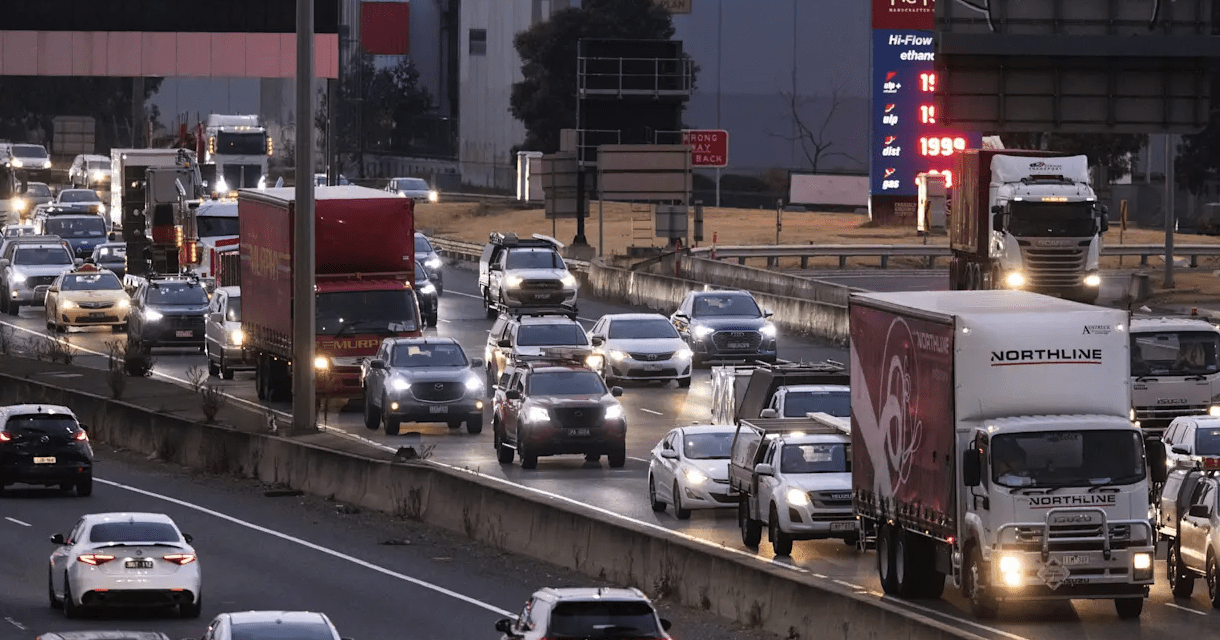
Image: The union says the spike in fuel prices is causing problems for half its members getting to work. Paul Jeffers


